
The excellent Eureka science magazine published by The Times includes a fascinating report about some very interesting research projects which scientists are working on and could change the world.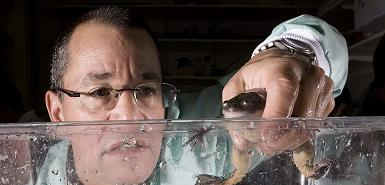
They include reducing the time that radioactive waste from nuclear power stations need to be stored before it is safe, finding less dangerous fuel than uranium for nuclear reactors, how to encourage the regrowth of amputated limbs and tissue (scientists have been working with frogs as we share many of our genes with amphibians which are capable of some tissue regeneration), as well as developing artificial intelligence to back up our memories with the aid of supersmart machines in the brain.
I can understand why scientists are developing a chewing gum which doesn’t stick to the floor by using new polymers. But there is one project which leaves me cold called The Mind Readers. It is being developed to make market research more scientific by using brain scans to find out what people like and dislike about a product.
It’s known as neuromarketing and volunteers are hooked up to a machine which measure the brain’s activity in response to certain products using functional magnetic resonance imaging.
I find it creepy that machines are being developed to have access to our innermost thoughts, and the fact that it is being done for consumerism is hard to justify. We are 10-15 years away from this type of machine producing accurate data. I would be interested to know who is sponsoring this research.
I fail to see the advantage this has over asking a person for their views. Do market researchers not trust the responses they presently get? I would prefer to see scientists use their valued skills on much more worthwhile projects.
The full list of 15 research projects highlighted by Eureka can be read here.
I don’t think this is anything to worry about – they won’t have access to our ‘innermost thoughts’, just our basic reactions to different stimuli.
It is well known in market research that what a respondent says can be influenced by a range of factors and is not always a true reflection of their thoughts or behaviour.
Dan, our reactions are based on our thoughts. Would you volunteer to be strapped up to one of these machines for consumerism?
Of course our reactions are based on our thoughts, but there is a big difference between the basic brain reactions that show up on magnetic resonance imaging and our ‘innermost thoughts’.
Provided I was sufficiently compensated for my time, I would have no problem at all taking part in this kind of research.
Dan, thank you for your comments. I am still not persuaded and don’t see any benefits over human interaction.
People commonly lie, consciously or subconsciously when particpating in market research, they say what the researcher wants to hear, they project an aspirational image of themselves through their responses, etc. Using biometric measures cuts through all that if done in a rigorous and scientific way. Whether this is more morally problematic than a straight participation in a focus group is a personal thing.
I will be visiting more often as you have done a good job, keep going..