
The moment I met Dr Phillip Lee at Manchester rail station and realised he was shortlisted for the Bracknell primary, I instantly knew Iain Dale had his work cut out. It 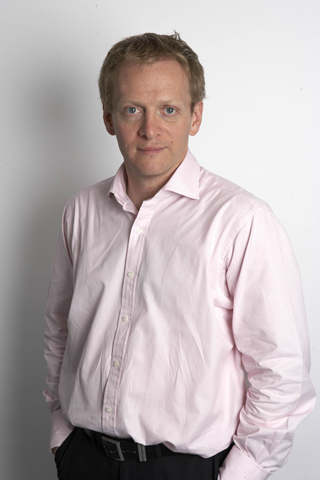 was impossible not to instantly warm to his genuine and open nature, his easy smile and the trustfulness which oozed from him. He certainly had that elusive X factor.
I felt pangs of guilt because, like the rest of blogosphere, I so wanted Iain to be selected and become an MP, knowing that he would be brilliant and hard working. And I hope one day that his dream will come true.
I sensed intuitively that there was something about Phillip that gave him the edge. It was more than the fact that he instantly likeable, as well as the only local candidate in the frame to replace disgraced Andrew MacKay; call it woman’s intuition. He has also been actively involved with his local Conservative Association – another big plus.
Certainly as a GP, Phillip plugs a much needed skills gap in parliament. I don’t know if this was taken into account during his selection, but it should have been.
I met Phillip when I was waiting for my train home from the Conservative Party conference; I shared his table in a cramped coffee bar with York Outer parliamentary candidate Julian Sturdy. We were all still wearing our ID tags, so naturally started up a conversation.
On the journey home, I read this thought provoking article in a Times science supplement entitled, “The brain drain: MPs’ skills gapâ€, and thought how pertinent it was for Phillip. It highlighted the shortage of scientists in parliament who are much needed to make crucially important and well informed decisions; for example the controversial Embryology Bill. Worryingly, the report stated that Conservatives have had problems filling their seats on the Science Select Committee, and that the scientific credentials of the next House of Commons were shaping up to be still weaker than the current one’s.
And did you realise that Conservatives have been giving new MPs classes in scientific literacy to plug this lamentable lack of knowledge? Yet we are relying on the skills of scientists to save our planet from climate change and to feed the world’s rapidly expanding population – which will all be based on decisions made by our elected representatives, both at Westminster, Brussels and beyond.
It’s reassuring to know that we have candidates like Julian too with an agricultural background and his expertise. When choosing a parliamentary candidate, there surely is a much bigger picture to consider beyond the needs of the local constituency, which is why Phillip and Julian will bring so much added value if – and when – they are hopefully both elected.
*As we prepare for a new tranche of MPs to steer our much maligned parliament through huge cultural changes, we need to be confident that they have the wisdom and skills to govern our country and public services effectively too. It’s a pretty sobering thought to even consider questions like, “What if Tesco ran the country?†because of the failings of our government and its honourable elected members.
I’ve republished the article in full in the comments.
Great. A doer turns over a talking head.
PPE graduate types are not good for Britain – they are career politicians. Hopefully we should be getting some war veterans filtering through soon – better still people who know about manufacturing, but fat chance of that.
Kevin, I agree we need more MPs with manufacturing backgrounds too, as well scientific. We certainly need people like General Dannatt too, in an advisory or elected capacity.
Here is the article in full, I think you will find it very interesting:
One of the greatest strengths of science is its rigour. While a hypothesis might be brilliant or even beautiful, neither quality is, by itself, enough. Every idea must be tested against evidence and, if found wanting, it must be revised or dropped.
If these standards are exacting, however, they also underlie a kinder aspect of science: it is by its nature forgiving. Perhaps more than any other pursuit it is comfortable with being wrong. There is no shame in having a bad idea that fails to survive contact with the evidence, so long as it is not clung to in defiance of data. Scientists are allowed — encouraged even — to change their minds.
This sort of facility with the U-turn is bred into researchers from the moment they set foot in a laboratory. But it is an attitude they must rapidly unlearn should they wish to enter a different realm of public life. What science admires as intellectual honesty is in Westminster the stuff of the gaffe. And this may well explain why scientists are so poorly represented in politics and government.
Scientists are no less politically motivated than any other professional group. Indeed, as intellectuals with inquiring minds, they often have strong opinions and principles. Yet they are in short supply in the House of Commons.
Only one full Cabinet member, John Denham, has a degree in science. In the Commons as a whole 110 of 645 MPs have a BSc or equivalent; almost 400 have humanities or law qualifications. Even this figure exaggerates the scientific competence of the Commons: it includes many social science graduates and arts degrees that carry a BSc, such as those from the LSE.
Hardly any MPs have followed a career in the natural sciences or engineering, and most of those who have are medical doctors. An academic background in science, of course, is not necessary to understand it, but even lay champions are thin on the ground. The Tories, for example, have had problems filling their seats on the Science Select Committee.
This gap in the collective expertise of the Commons matters, not least because many of the most pressing issues of the coming years have such a strong scientific dimension. There is the obvious challenge of containing climate change while meeting the country’s energy needs. Advances in genetics and personalised medicine will soon place new burdens on the NHS. Science and innovation are acknowledged by all parties as critical to “rebalancing†Britain’s economy away from reliance on financial services. Yet Parliament’s scientific literacy, already low, is facing something of a double whammy.
First, many of the MPs who are most adept with scientific issues are on their way out. Ian Gibson, a rare politician who worked as a scientist, has gone already over his expenses. And retirement is claiming three stalwarts of the science committee — Phil Willis, Brian Iddon and Tim Boswell. Others who know the field, such as Denham and Evan Harris, are fighting marginals. The scientific credentials of the next House of Commons are shaping up to be still weaker than the current one’s.
The second threat is that Parliament’s scientific safety net is poised to be unpicked. The House of Lords is packed with peers who know their science, many appointed after illustrious careers in the field. Lord Rees of Ludlow, Lord May of Oxford, Baroness Finlay of Llandaff and Lord Krebs are just a few of its scientists and doctors of great standing. Other peers with a love of science — Lord Sainsbury of Turville and Lord Drayson — have served capably and knowledgeably as science ministers. Their understanding brings an extra dimension to Parliament.
When the Embryology Bill was considered last year, the quality of debate in the Commons was poor, with few MPs grasping the complex issues in any detail. The Lords, however, substantially revised and improved the legislation, through the expert intervention of figures such as Lord Patel and Lord Walton of Detchant. The Upper House’s recent report on genomic medicine also provided the Department of Health with a much needed road map for difficult challenges that lie ahead.
The very peers who make the Upper House so valuable, however, may soon be expelled. All the main parties say they favour a wholly or substantially elected second chamber, from which most or all these scientists would be turfed out. A constitutional reform Bill is reportedly planned for the Queen’s Speech, and could be law before the next election.
Their possible departure makes it still more important for the Commons to get to grips with science properly. The Tories have taken a step in the right direction by giving new MPs classes in scientific literacy, and the other parties would do well to follow. The principles of the scientific method can be learnt easily. They should be as familiar to every serious parliamentarian as law or economics.
A command of science can also be a political weapon, even if the U-turn is not. The skills involved in interrogating evidence are not much different from those required of a competent minister or a backbencher holding the executive to account, and their current scarcity makes them particularly valuable. There are great opportunities here for astute newcomers to Parliament to make their names. An ecological niche in Westminster is waiting to be filled. 
Please allow me to introduce a member of the Conservative candidate list who is a Chartered Aerospace Engineer with an Oxford University MSc in Computer Science and 18 years’ experience of managing technical endeavours: me.
In an act of shameless self-promotion, more at http://www.stevebaker.info.
Steve,
It’s good to “meet” you. I’m delighted to hear of your excellent science background and have no problem whatsoever with your self-promotion. Good luck.
Ellee
If Tesco ran the country, would there be any weekly special offers?
We already have buy one get one free with immigration.