
This is National Dementia Week and I am promoting it with this guest post written by Joanne Knowles, who is tirelessly crusading for sufferers to be helped with a clinically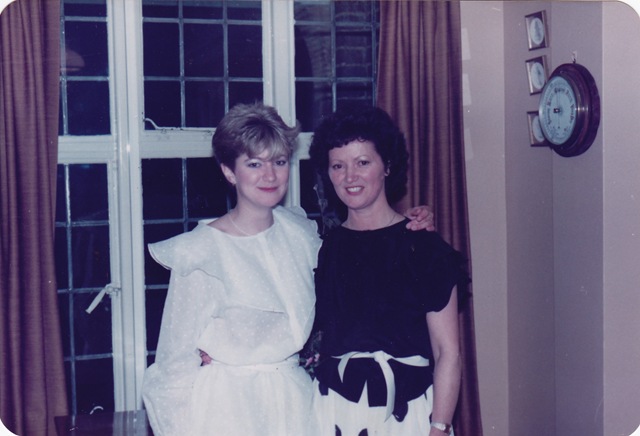 approved course which she feels passionately about. I can totally understand why Joanne (pic below) wants to do everything she can to help her mother who has dementia – they are pictured together here at Joanne’s 21st – and other sufferers.
This is her story:
In 2006 the National Institute for Clinical Excellence recommended that everybody in the mild-moderate stages of dementia had access to a course of Cognitive Stimulation Therapy (CST). This simple psychosocial therapy was developed by University College, London and works with small groups to actively stimulate and engage people in the early stages of this disease and help them function at their maximum capability.
That same year my mother was diagnosed with dementia aged 65 in The National Neurological Hospital, London. We had known there was something wrong for a few years, and in a way it was a relief to have a diagnosis and understand where we were. Mum asked to meet some people in a similar situation and whilst looking for a way to make this happen I came across CST. After a year of false starts with the local Alzheimer’s Society, I helped to set up a pilot with Age Concern in Horsham.
I had assumed that if the pilot was successful, statutory funders would take it on. I was shocked when a group, including the PCT commissioner, applauded its work in October 2008 – and then told us that they could not fund the scheme. Since the completion of the pilot, the weekly sessions have continued with piece-meal funding for existing members, but no new groups have been started.
Feeling increasingly frustrated at all the talk of pharmaceuticals and longer-term research, I decided to take a leave of absence from my politics studies at SOAS (and my senses) to try and generate some awareness and access to CST, which I have been doing with very limited success over the past few months. I have been staggered by the lack of foresight and commitment of PCTs and Mental Health Care 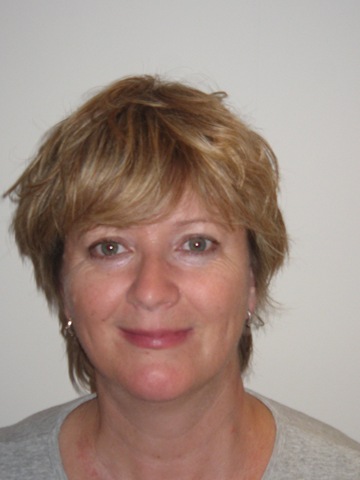 Trusts to tackle the desperate isolation that people experience with the diagnosis, including the way in which their friends fall away, and their coping strategies of avoiding social and more complicated situations which leads to loneliness and often depression for the person with dementia and their carers.
Unfortunately, I have been unable to make a sufficiently compelling economic argument to see the successful pilot extend throughout the country, even though early intervention has been found makes sense both socially and fiscally. However, I am hopeful that some progress is being made. Boots and Alzheimer’s Society both publish fact sheets on dementia and are considering mentioning CST; BUPA have responded promptly and positively and will be mentioning CST on their website, Mind have just also agreed. I have contacted all the members of the Association of Directors of Adult Social Services as it is currently local authorities who pay the biggest increase in funded costs when someone moves from a mild to a moderate dementia and so they would seem to have the strongest reason for offering a cost effective (according to LSE) therapy that helps people stay well and live independently longer.
I am chipping away at the thick walls at Alzheimer’s Society, who are aware of CST and ‘will review this approach alongside other approaches and models of interventions when we are at that stage in our developing programme.’ Crossroads (a national carers support charity) is starting a course, and hopefully more will follow. A couple of medical publications are considering running articles, but have hit a brick wall with Age Concern England who, after a year of correspondence, have refused to send out information on CST to their mental health network ‘since we cannot be confident the promotion of CST, at least at this stage of its development, would be in the best interests of older people and their carers, we feel we must now withdraw the offer of its promotion to the Network’.
Yet this is a NICE recommended treatment and the programme is brilliantly straightforward to deliver by someone who has the experience of working with groups and with people with dementia. Sadly, there is still very little awareness or action.
Cynically, I can see that most people with dementia are no longer economically active and most of the costs of caring fall to families so possibly, despite all the rhetoric, actually the decision has been taken to offer as little support as possible.
According to Professor Steve Iliffe at UCL, ‘ innovation diffuses slowly unless it has powerful champions’, and sadly with a scraped pass at O level biology, it seems I have been a lowly and lonely campaigner and am yet to find a powerful champion. According to the Alzheimer’s Society, one person is diagnosed with dementia every three minutes, and 1 in 3 people over 65 are dying with dementia; so this really is everyone’s problem. Any suggestions or further information, please contact me at knowlesjoanne@hotmail.com
I do agree that dementia needs alot more publicity and research in the UK.
The US have a good system of research into the disease and have made significant progress in some areas…much more than the UK anyway. I would suggest moe government intervention, but seeing as we are now bankrupt financially, perhaps this campaign is going to unfortunately struggle.
As you know Ellee this is a topic dear to my heart. So good luck to Joanne as she tries to make this program more available to those who would benefit from it.
It was a wake up call to me when my friend whom I had hired caregivers for in his home, as he requested, went to hospital and I saw how he blossomed in a more social environment. So at that point I decided to put him into a home which had a special section for cognitively impaired people and very good programs for them.
Of course it was a temporary improvement as his Alzheimer’s progressed in the usual way. But he did have two good years from this.
Pelmanism is a useful game to retrain the memory.
Well done, Joanne. People with this cruel illness need someone like you to fight for them. It is a cause close to my heart as my Mum was a sufferer.
It’s something a lot more people need to be aware of.
I watched my good friend for years as her mother deteriorated and she was forced to move her to more and more intensive care facilities. It was heartbreaking – and she had the finances to be sure of the best care. My heart breaks for those who have less or no resources.
Now, my mother-in-law, whom I have always liked so very much, is returned to me just as she is beginning to take that long slide into total living oblivion. At present she has ‘only’ short term memory loss – she knows who we are but not that she saw us five minutes ago. However a few weeks ago when J. and I went to visit we found her in great distress. She was very concerned that Maurice (her husband) had not returned from the movies. We had the heartrending task of reminding her that Maurice died in 2003.
As we took her into our arms it was a knife through the heart to feel her grief. felt new all over again.
I have volunteered to be the one to see her through the rest of her journey. I have the luxury of a more flexible schedule and time. For whatever reason I am equipped with the emotional tools to see this through better than those more closely related. I will be doing much research I am certain; and I wish all those who will be taking this journey – whether as a care giver or an onlooker or a support system – strength and the knowledge that, even though we don’t understand it, this too is part of the journey on the Path.
Thank you Joanne and Ellee. I think the more information that is out there the better, the more call for research – the greater the chance it will be heard. Every personal story is valuable and makes others facing this problem feel less alone.
[…] Ellee Seymour – MCIPR, PRESS CONSULTANT, JOURNALIST, POLITICAL AND … […]
This is a terrible thing that takes away vital sharp people bit by bit. They know it is happening. Anything that can slow it or roll it back needs pursuing.
The politicians and all of us should keep in mind that there, but for the grace of go go all of us. Without greater action certainly some of us will.
such a heart wrenching story, I am fortunate at the moment, that I haven’t had to deal with anything like that.
It is a lottery in this country, whatever your illness, totally wrong, if you are ill, you should get the help…!!
Also read somewhere yesterday about What is means tested and what isn’t and which country does what, ie Scotland and Wales, against England…if you have to go into a home, etc, Well guess what…..England is the worst.
Well done to Joanne, yes we need more people like her to SHOUT out…