
Can you imagine what life will be like in 2030? What  changes
  will technology and medicine have made to our lives? Do you fancy living to 130?
Futurologist Ray Hammond has come up with some answers in a thought provoking book entitled The World in 2030.
My thoughts are that cars will be banned from cities, there will be taxes galore for global and local environmental projects, we will live in more confined spaces, we will have less freedom of thought/actions – and I will be struggling to survive on a meagre pension, still having to work in my 70s. Maybe those who live in properties with empty rooms will have to offer them to the homeless caused by our booming population. And of course, climate change, drought stress and concerns about growing sufficient crops to feed us all.
Here are some Raymond’s predictions, the references to plastic are made because the book appears to have been sponsored by PlasticsEurope.
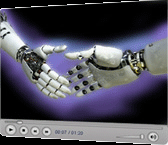
- By 2030, one billion people will be 65 or older. In Japan scientists are developing robots made out of advanced plastic materials to look after the elderly (taking over repetitive tasks) and robots will be a permanent feature of everyday life all across Europe.
- People will be wirelessly ‘tagged’ for their protection. We will transmit our locations constantly. Data about on our health will be collected and transmitted and, if we are taken ill, help will be summoned automatically.
- A revolution in medicine will have occurred. Personal DNA mapping, powerful new gene therapy drugs and stem cell research will mean that medicine will prevent illness and extend life. With plastics playing a large part in healthcare, people in 2030 will reach the ages of 130+
- The weather in 2030 is likely to be extreme. The solution to the energy crisis will be to harness natural, clean energy sources (in the sun, wind, oceans and rocks)
- The internet will have developed into a ‘super combined web’ – always on, everything connected. People, our pets and trillions of inanimate objects will communicate wirelessly every second of the day. It will deliver 3D holographic experiences, tactile simulations, odours and tastes
- Some aspects of daily life in 2030 will seem very similar to today. We will live in houses and apartments as we do today (with many properties upgraded to maximum energy efficiency, thanks to plastics), and children will still go to school – supplemented by virtual learning
None of these predictions seem very attractive, it is quite a gloomy outlook, I wonder what can we look forward to in 2030? I don’t particularly fancy a wired up pet. I wonder how many times I will say those words which we scorn so much: "in the good old days …"!
Let’s make the most of them now while we have them.
So the future’s plastic!
I’ve got a few predictions for 2030:
We’ll love our families and friends.
We’ll pay too much tax.
The taxes we’re currently paying to stem global warming won’t have achieved much apart from making us poorer!
We’ll have the ability to make democracy far more efficient with weekly votes on what the country really wants but politicians will still be evaluating them 20 years after the technology was announced!
My word, 2030 is only 24 years away! I was at the mid-point of my career 24 years ago! I think some of those ideas are fantasy, others more likely. I think there is a risk of terrible global famine, loss of habitable land and ensuing border disputes. Maybe not Enoch Powell’s rivers of blood, but immigration difficulties like we never imagined. We could become a ring-fenced island, with no-tolerance immigration, like Australia.
I see one hope on the horizon. Nuclear fusion cannot now be far away and with a pollution free, carbon-less, cheap, inexhaustible energy supply there is perhaps hope of a stable peaceful world eventually. Until the asteroid strikes…
Maalie, that’s the scary thing, it’s so close. And who knows how close that asteroid is.
Image consultant, I’m not sure how attractive a plastic future is, it’s obviously in this company’s best interest to promote it as an essential material.
It sounds as if people will be planning to colonise Mars to found a “better civilisation”
go back to the story on the $100 laptop, consider the “disconnect” in africa, the mideast, and the “-stans”; and imagine a world where some of these predictions are true for some of the world-but not for many of the same folks that are disconnected today.
that would suggest to me a more radicalized population in those parts of the world, as the divide grows farther apart faster. (why faster? moore’s law…)
a “tagged” future?
imagine the troubles we have today with database management, hacking, and “cloned” cell phones, and the “tagged” future seems like an imperfect reality waiting to be manipulated in new and fascinating ways.
call me a cynic, but throughout most of history government is trying to play “catch-up” to a population that’s usually a step or two ahead, and it’s hard to imagine that changing-especially as the “overhead burden” of government makes it less nimble, rather than more so.
There will be none of this technological hoopla because the oil will be almost gone. I with I could be optimistic about the future but my honesty forbids it.
I don’t think I’ll be around then so I won’t worry about it!
Would we have imagined how we are now 23 years ago?
Weather will be more extreme ?
Forcasters can’t be trusted to get next week’s predictions right let alone in 24 years time.
We forget that in the UK technological advancements reach us AFTER the Japanese and the Americans. We are slipping behind in all this.
Who’s to say that the future isn’t Chinese or Indian ? That we will swap places with them and be washing our clothes in rivers.
We’re not doing a very good job of maintaining our standards.
This is pretty depressing stuff and I agree, Ellee, I don’t like the idea of a wired up pet. I will be 73 by then and probably living alone as my husband is a lot older than me. He’d be 90 if he was still alive. No – too depressing to think about at the moment I’m afraid.
Do these futurologists ever get it right?
Lets just hope they have air conditioning in the underground by then!
[…] 2. Wonder how we will be living in 2030? Have a look… […]
People have been predicting robots since the 1930’s, maybe earlier, I doubt that will happen, especially if Microsoft is the operating system. I think people will be pretty much as they’ve always been except that if stem cell research advances it might, might, actually solve health problems. What I mean is that drugs have side effects and tend to manage problems whilst creating new ones. The management of pain still relies on opiates and is not generally very well administered by medical professionals; it’s a bit of a lottery.
The down side to stem cell research is the moral issue and if we live longer then that’s all very well if we are healthy and pain free but if not then the reducing quality of life produces the dilemma of euthanasia balanced with an artificially maintained consciousness. The whole moral maze of living wills and acceptable medical intervention and research will not be an easy one to navigate I think.
My prediction is that we will see an increase in the tension between Islam and the rest of the world. In fact I see a growing fondness for radical religious belief as the antithesis of social chaos percieved by many who desire a more strict social and moral framework.
Sorry to be slightly dull Ellee, my slip is showing I know, I’ll be back to frivolous as soon as my coursework is done.
2030. England fail at the World Cup finals!
“super combined web”? Who wants their dogs connected to the internet?
I remember about 10 years ago having a conversation with someone predicting a fridge that could order food that you’ve used. I don’t want that, and I’m quite a geek who likes stuff to be done for me.
With all due respect a futurologist could paint a much more realistic if not rosier picture.
1) Because growth in car ownership will have grown and petrol prices gone up further (if not rocketed) in Europe – there will be significant advances in the ‘electric car’
2) The system installed and used to control congestion charging in ‘inner’ cities, will also be able to control the flow of traffic more efficiently than traffic lights. Yes in ‘advanced modern cities’ in Malaysia, South Korea, Japan, and Beijing (China) – buses and public transport(?) taxis will be able to make headway efficiently.
Of course had to improve this in older cities and old europe without reducing the numbers of private vehicle owners entering the city centre
So only the rich or ‘upper middle classes’ will be able to afford taxis to go and see a play in London (or Cambridge City Centre). The plebes will have to settle for a pint and karaoke down the local
3) Yes there’ll be even more information about you. Not only will they know where you shop which brand of shampoo you use, and which tampons you favour – they’ll also know at the touch of a button (or click of a mouse) what disease(s) you have, and what drugs you use. But then again the war on drugs has always been again drugs that cannot be patented and/or taxed – lol.
As for living to a 130. Not in your dreams. They may raise the retirement age to 130, so that they don’t have to pay pensions any more. But even raising the retirement age of the masses to 75, will significantly & considerably reduce the pensions bill, whilts those on higher incomes will private pensions and private health care will continue to dream about retiring at 55 and skim off the top for another thirty or forty years.
Unless we have another French Revolution and Madame Guillotine is re-introduced. But this could be a two edged sword. Imagine if the Law says it is not worth more than £20,000 a year (at today’s prices) to keep someone alive in 2030 – whether in medical bills – or – in pensions. Of course the Law Lords who work till they are 90 and retire on £150,000 a year, and US Senators may not favour this law, But let us not forget the French Revolution could (or should) take place in the USA.
4) The Internet will be even more senseless than it is. Never mind 1001 channels of crap tv
The Tower of Bable has really arrived. Just as it is hard to discern what is ‘news’ or misinformation in the daily papers and tv, it will be ever harder to ‘doscern’ what is worth reading and what is not – online.
Of course site administrators – and – moderators, may again bay be the next stage – with pay to view sites. Personally I still cannot believe “pay to view tv” exists, but never underestimate the power of sport & the media.
5) – And finally though some medical advances will take place, the costs are rising so high, that those who cannot pay will continue to die, whilst those who can afford to pay will continue to be willing to pay an arm and a leg – preferably someone elses arm and leg of course.
As for robots – yeah, yeah
You can’t beat a Mexican Maid or Filipino Nurse