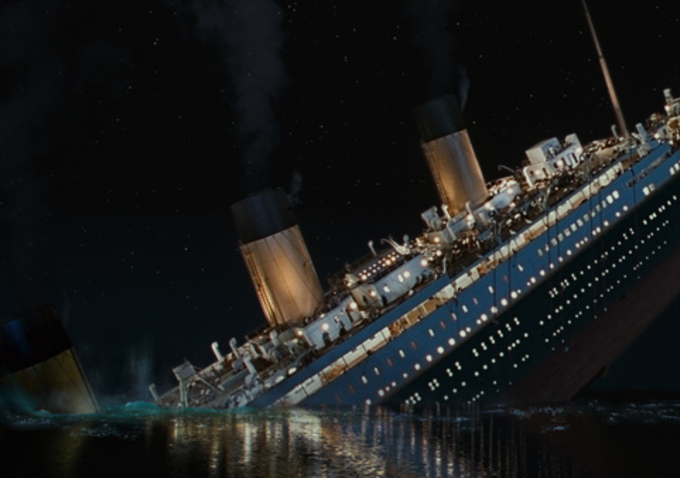
I do confess I would loved to have joined passengers on a commemorative journey to mark the 1ooth anniversary of the sinking of the Titanic, a tragic story that continues to fascinate us all.
I listened to a programme about it on Radio 4 at the weekend which included a discussion about the chivalrous saving of women and children first, and then first class passengers. This is not a protocol which is followed today as the sinking of the Costa Concordia demonstrated, and even a century ago, some feminists questioned whether it was the right thing to do.
Prof Lucy Delap, of St Catherine’s College, Cambridge, mentioned the actions of suffragettes afterwards who responded to the Titanic disaster with the memorable slogan, ‘Votes for Women, Boats for Men’, stressing that women voters would put human lives above corporate profit in regulating the ocean liner companies. What fantastic gutsy souls!
Lucy says: “They emphasised the irony of putting women first in shipwrecks, only to exploit or exclude them systematically in other realms. And some suggested that the vulnerable – the weak, the elderly, the very young – should precede the strong, whatever their sex.”
I was also riveted by the Times’ commemorative pull-out supplement about the Titanic and its gripping reports of heroism from that terrifying night on 15 April 1912 when 1500 people died. The musicians who played on the decks of the Titanic as the vessel was sinking demonstrate the selflessness that existed. In fact, male survivors from that night were despised for having survived, for leaping into a lifeboat while more than 1,500 others perished in their watery grave, their agonising and pitiful cries echoing in the night sky; those in the water died within minutes from hypthermiacaused by immersion in the freezing ocean.
One story of heroism that moved me was about Colonel Gracie, of the United States Army, who jumped from the topmost desk of the Titanic when she sank, and he was sucked down with her. On miraculously reaching the surface again, he swam until he found a cork raft and then helped to rescue others. He said later:
“After sinking with the ship it appeared to me as if I was propelled by some great force through the water. This might have been occasioned by explosions under the water and I remember the fearful stories of people being boiled to death …. Again and again I prayed for deliverance, although I felt sure that the end had come. I had the greatest difficulty holding my breath until I came to the surface. I knew that once I inhaled, the water would suffocate me.Â
“When I got under water, I struck out with all my strength for the surface. I got to the air again after a time which seemed to me to be unending. There was nothing in sight save the ocean, dotted with ice and strewn with large masses of wreckage. Dying men and women all about me were groaning and crying piteously.”
Another survivor describes the unbelievable British restraint and the extreme niceness from those in the freezing water who were turned away from his very full raft.
“Hold on to what you have, old boy,” we shouted to each man who tried to get on board. “One more of you would sink us all.”
Many of those whom we refused answered, as they went to their death, “Good luck, God bless you!”
The piteous cries of those around us ring in my ears, and I shall remember them to my dying day.
And were the last words of the captain of the Titanic really, “Be British, be British”?
Extraordinary……
Women and children first? Are you sure? All the dramatisations depict rich women and children first but the poor were locked below?
Nope The rule of women and children first was largely adhered to.
From Wikipedia – percentage lost
Women, First Class 3%
Women, Second Class 14%
Women, Third Class 54%
Men, First Class 67%
Men, Second Class 92%
Men, Third Class 84%
Just heard on BBC Radio 4 tonight recorded transcripts from the Titanic’s radio operator as he sent out the SOS messages to nearby ships & you also heard the ships’ replies. It was quite gripping.
Belated Happy Easter Ellee!
The quote at the end by the guy who survived and helped other but saw many more die is very powerful and if I had lived through an experience like that it would haunt me and define me for the rest of my life.
I thought the hero of the hour was most definitely Jack Dawson. Rose was a fool to let him go but even more of a fool for letting The Heart of the Ocean go too.
I think it would have been a more fitting end to the story had she ‘hocked’ one back as the young Jack had taught her to do when she was a young lady.
Why did the newspapers never report this story ?
It would have made a great film.
I think Philipa has it about right. However I have only ever seen these acts as a way of “protecting the species” Women and children first is a way of ensuring that life goes on, and of course the rich see themselves as more important than the poor.