 I’ve just issued a press release describing how the humble rosemary plant could revolutionise the way that some oil-based products are made, providing a “greenâ€? alternative to the synthetics and fossil fuels which are presently used.
Research scientists at the National Institute of Agricultural Botany in Cambridge have joined a group of leading industry and research partners to determine the feasibility of using the environmentally friendly antioxidants (AO) extracted from rosemary plants for the production of cosmetics, plastics and lubricants.
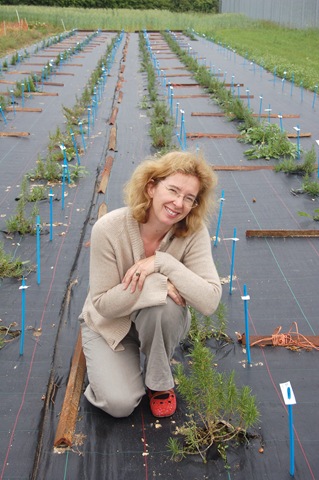
It has attracted lots of media interest, including BBC Look East, and Dr Lydia Smith, (pic), who is leading this project has given several follow-up interviews. We are hoping for some national coverage too.
It’s a fascinating project as present evidence suggests that there are relatively large quantities of strong AOs in the foliage of rosemary which could be extracted and used for other purposes besides culinary. Rosemary extract is increasingly under scrutiny for its AO properties. Like other AOs, it inhibits and fights free radicals.
The cutting-edge project is described as “an opportunity to enable the totally green supply of lubricants, cosmetics/health products and polymers, especially packaging”.
Dr Smith said the potential of this project was far reaching, and could really change the way oil-based goods were produced, enabling “greener� alternatives to be used instead of synthetics and fossil fuels.
So next time you use the rosemary plant in one of your recipes, just imagine that it could one day be grown as a crop by UK farmers for its versatility, as an ingrediant in some cosmetics in place of petro-chemicals to improve their shelf life, in the production of plastics used for food packaging and to provide less toxic lubricants than the oil-based alternatives.
Members of the group working with NIAB on this collaborative project, which is partly sponsored by Defra through the Renewable Materials LINK programme, are Bangor University Composites Centre; Aston University; Boots-Alliance; Co-operative Retail; Croda International; Frontier Agriculture; Horticultural Development Council; Industrial Co-polymers; Lubrizol and Uponor Housing Solutions Limited.
Recent Comments