I’ve been drafting a press release today for CHASTE – Churches Ale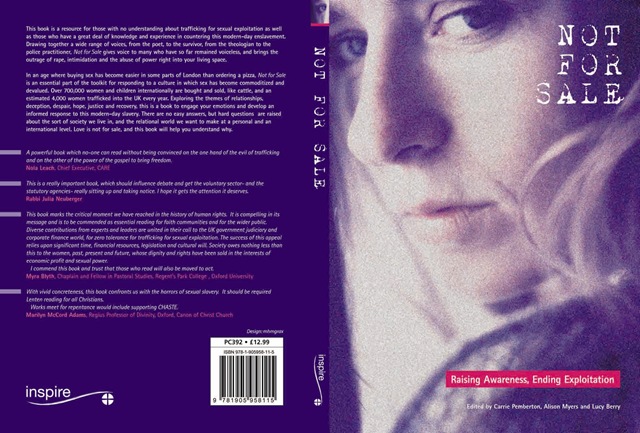 rt to Sex Trafficking in Europe – in response to yesterday’s announcement by Home Secretary Jacquie Smith about the police crack down on human trafficking .
I happened to mention that today was National Poetry Day. So CHASTE’S inexhaustible founder and chief exec, Dr Carrie Pemberton, suggested I publish a poem from their recently published book entitled Not for Sale: Raising Awareness: Ending Exploitation, available from their bookshop here.
This poignant poem, called Dog-girl, describes the feelings of a sex-trafficked girl, and was written by Lucy Berry:
Dog-girl
When you are a dog,
You watch your master all the time.
If he comes close
I look at the ground.
If he strokes you
You are happy it is not a beating.
Dogs cannot think.
Thinking is not for dogs.
When you are a dog
You obey straight away.
Come here.
Lie down.
Roll over.
If you are good
You get to eat and to sleep.
If I am not good
He beats me with
The lead from the kettle.
This is all a dog can expect.
I am a dog now.
There is a little park
Away through the alley
Which my window looks down through.
Dogs run there, no leads, playing.
But I am frightened of sticks.
Lucy adds:
Poetry is only worth reading (or writing) if it says something more intensely than prose can. By that, I don’t mean that all poetical topics have to be ‘heavy’. But the function of poetry is to feel more accurately/ authentically what you already thought you knew about – or to sense something entirely new. This poem about the sex-trafficked girl; could it have produced the same response in prose?
Lucy is absolutely right, poetry allows a more intense portrayal of emotions to be crafted.
What is your favourite poem? I must admit that since school I have read very little poetry, though I always enjoy delving into my local romantic hero, Rupert Brooke.
I think the most powerful anti-war message I ever read was Dulce et Decorum by Wilfred Owen. It says all that’s needed in the most horrifying manner.
Thankyou for alerting me to National Poetry Day, I didn’t know. I agree with Lucy’s assesment of poetry and think the poem quoted very powerful.
I was told that if a poem has no rhyme and scan it’s not worth anything. I disagree and think rules can be too rigidly adhered to, sometimes breaking them makes a point – fracturing a rhyme can convey that meaning; that something is fractured. And sometimes a poem is just play and a giggle should not be subject too strictly to form and structure. However I would like to get around to reading Stephen Fry’s book about poetry and some of his poetry too. He has a blog (here) that I’ve found interesting. My favourite poets include Yevtushenko and, spookily enough, David Thewlis AKA Prof. Lupin.
That’s very compelling and powerful.