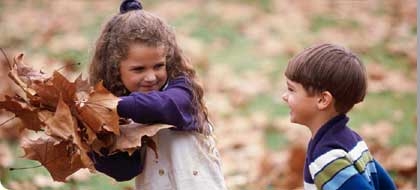
 What a difference a generation makes. When I was a kid, I was happy making dens and mud pies, playing teacher with my dolls and reading lots and lots of books.
Today’s digital kids are instantly bored if not plugged in to their iPod, a chatroom or computer games as soon as they are weaned off Telly Tubbies. They have become obese through lack of exercise and a diet of junk food, they are also in danger of becoming mentally affected by the stresses of their young lives.
All this is no surprise, they have, in effect, become mini-versions of their parents, their role models, the most important people to shape their thoughts and aspirations, their values and confidence.
No wonder the clamour of concern now being voiced. Thankfully, as a parent, David Cameron is going big on this at the Conservative Party Conference, The Telegraph too. Cameron also wants kids to be kids. Making families pivotal to Cameron’s future policies will hopefully help turn round the tide before too many more are sucked in.
“To me the family is not just the basic unit of society, but the most effective part of society.
“Everything I would do in Government would have to pass one simple test: will this help families to do more of what they do?”
Cash-strapped families are increasingly facing it difficult to make ends meet thanks to the hardships caused by this Government, forcing mothers to work.
However great the flexi working hours are for mums, the fact is that at the end of the day, they are shattered at having to squeeze 30 hours work into 24 hours, so they will take the easy way out.
On the other hand we give our kids little freedom, we over-protect them, fearing for their safety, as well as booking them in for endless activities at the end of the school day, wanting them to be best at everything.
Yet a child wants one thing from his parents – time. Their time is the most precious commodity – time for talking, listening, playing, being there. Time to cook a fresh chicken instead of a bag of chicken nuggets (both costing the same). Time to have fun together and provide reassurance, time to be friends. That seems to be the message from Super Nanny too who makes parents get down on the floor and interact with their kids on their level instead of dumping them in front of a TV all day.
I would very much like to see young people become actively involved in community projects, befriend our elderly and others in need of company and support, as well as ethnic groups, so they can learn from these different backgrounds, broaden their outlook on life. It might help instill in them a sense of pride in their neighbourhood, they would learn how much more rewarding it is to give than to receive.
What childhood memories do you have that no longer exist today?
Hello. Gosh, what a lot to think about! I think the one childhood memory that stands out for me is that of talking for hours, especially to my Grandad and Great Aunt, who lived with us. I wonder if today’s kids would even listen, itching to get back to their digital games? I learnt so much from those two elderly people and it has stayed with me.
Living in Italy now, I can’t help feeling that here they are doing something right and we are doing something wrong: families eat together, celebrate together and sons and daughters are not eager to leave home at the first opportunity. If the parents are invited out to dinner, the children go along too – they are not left with a babysitter. It seems to do nobody any harm at all.
Welscakes Limoncello, I’m half-Greek and understand exactly what you say about the closeness of European families. Perhaps it’s the Victorian view that “children should be seen and not heard” that is partly to blame for the origins of the breakdown in family communication, though hopefully no longer adhered to today.
I think the key difference between we boomers and X’ers and those who have followed is the degree to which they are / were cotton woolled by their parents for safety reasons. I grew up in a commuter belt village and had free reign to cycle around the village unaccompanied, wander across the fields and build dens and so on. I can’t imagine that many children growing up in similar environments have the same liberty now. While I miss my sons (4 and 7), where they live in France they have a far greater freedom to climb trees, play pooh sticks and generally take risks than they would have in London or even the outer commuter belt.
There’s a Chinese proverb to the effect of ‘One illness, long life. No illness, short life’, the point being that when things go wrong, we pay heed. Likewise, a few skinned knees are more likely to teach children about risk, danger etc than any number of parental lectures.
It’s so true that today’s generation have lost out on childhood; instead they are reared on technological gadgets, and are given a mobile phone as soon as they can talk.
When I was young, I used to go out and play, as it seemed to be the thing to do; nowadays they stay in. Sadly, the weird people that are around are another cause of this.
This is an interesting conversation. Things are no different in the US. I refer to Search Institute’s research often – the Asset Approach. It’s a common-sense, yet research-based way of looking at young people.
Thank you for visiting my site. I appreciate your insight.
Kelly
Home of Pass the Torch Tuesday