Would you take part in drugs trials, particularly bearing in mind the fate of six men who ended up in intensive care?
I imagine the number of volunteers has since plummeted dramatically, and 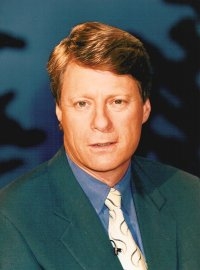 tonight’s debate in Norwich is aimed at increasing this. It is part of the high profile British Association Annual Festival of Science.
Nick Ross – and some of his friends – will be leading this controversial debate. I found an advertisement in the local press where Nick urges people to volunteer for future clinical trials.
“Six men suffered multiple organ failure during a drug trial earlier this year. Their desperate plight made headlines around the world. Yet I urge you, your family and your doctor to support and, if you could ever help directly, volunteer for clinical trials in future/
“Why? What are the risks, what’s in it for you, who profits from these trials and what’s in it for the rest of us? Join me and some of my friends on Wednesday evening to debate the issue. We will be in good company – some of Britain’s top scientists, doctors and other health professions are in town to meet the people of Norwich.”
I believe in doing my bit and carry an organ donor card, I can understand the importance of trialling new drugs, but there was a catastrophic failing which has naturally caused fear in the population.
I have to care what happens to me because I am a mother, wife and daughter and my family needs me to remain fit and healthy. What reassurances will the people of Norwich be given about this tonight? Have the families of those involved in the disastrous trials been invited to speak about their personal experiences? And how informative will this debate be as it is due to only lasts 1/1/2 hours?
There is only one way to convince people Nick, and that is to volunteer yourself, as well as those you love, to prove we have nothing to fear.
Personally, I want to stay all in one piece, Ellee, though I think highly of those who carry donor cards.
I think the point is not that drug volunteers should have nothing to fear. They take the risks so that ‘normal people’ don’t have anything to fear.
It’s a horrible, risky job, which I wouldn’t want to do myself. But it’s well compensated, and like the man says, someone has to it. Or else we won’t have clinically-tested drugs – and then the risk is shared not among volunteers but among the general population.
I carry an organ donor card, when i get my life settled at uni I will give blood, but when it comes to taking pills it is so different.
I think I would if the price was right, but i would be very selective in which ones i took part in.
Wowww…..That’s great… Thx a lott Ellee, you made my day…ummmm.. u made my Blog infact.
Yesterday .i.e. on 6’th Sep, Times of India published an interview of Mr. Cameron on 21’st page. You can check it in it’s e-papaer here.
http://epaperdaily.timesofindia.com/
You may check this link also.
http://www1.timesofindia.indiatimes.com/articleshow/1965632.cms
Thx a lott for linking me.
Yup – no questions about that one. My wife and I will give our bodies first for organ donation and then to medical science when we are done. And if the scientists don’t want us, then maybe the teaching hospitals do!
AJD, I remember having a particularly painful lumbar puncture once when I had meningitis during which the doctor broke every rule in the book. He was told he was not allowed to do this on patients any more, that he would have to practise on corpses for a while instead. So they do fulfil a very important role.
But are you sure that corpses still used by medical students? I would imagine so, but I seem to remember someone telling me this was no longer the case, which I would find difficult to believe.
As far as I am aware, students still use dead bodies to practice on. But I might be wrong of course….
I am glad it wasn’t me under the needle… but what can you expect from Kings Lynn hospital?
Oz still uses cadavars for medical research at our teaching hospitals etc. However my body won’t be one of them, i dunno, i just get freaked out by the whole thing.