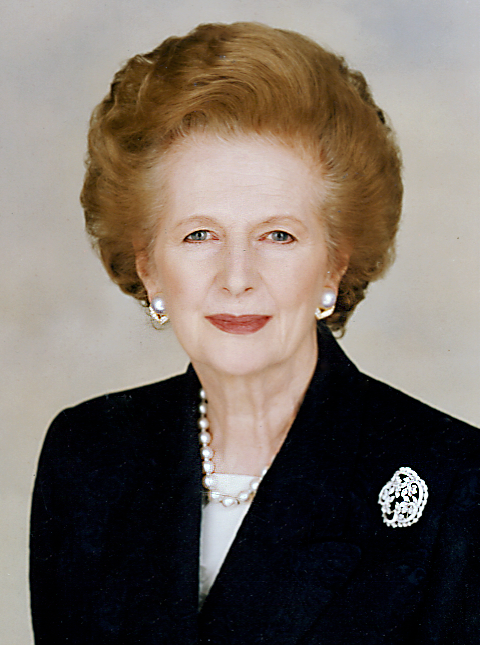
Love her or loathe her, whichever political colours you endorse, there is one way that Baroness Margaret Thatcher could make a positive difference for countless people’s lives, and that is by donating part of her estate for research into dementia, the disease which she was cruelly inflicted with for the last 13 years of her life.
Those close to her know only too well the devastation it can cause. If Baroness Thatcher has not left such a bequest, then perhaps her family would consider a donation to create either a research foundation in her name (she was a scientist, after all) or to support existing research into Alzheimer’s disease. It was impossible not to be moved by watching her confused actions enacted brilliantly by Meryl Streep in The Iron Lady.
We all know that dementia is increasing. Government figures show that there are around 800,000 people with dementia in the UK, and the disease costs the economy £23 billion a year. By 2040, the number of people affected is expected to double – and the costs are likely to treble.
Carol Thatcher was the first to tell us how she noticed in the year 2000 that her mother was struggling when Baroness Thatcher had to be reminded several times her husband, Sir Denis, had died.
The former Conservative prime minister was confused between Bosnia and the Falklands during a conversation about the war in the former Yugoslavia.
“I almost fell off my chair. Watching her struggle with her words and her memory, I couldn’t believe it,” she said in her memoir, A Swim-On Part in the Goldfish Bowl.
“She was in her 75th year but I had always thought of her as ageless, timeless and 100% cast-iron damage-proof.”
The contrast was all the more striking because she had always had a memory “like a website”, she wrote.
Some thought it was cruel of Carol Thatcher to tell us about her mother’s struggles. But we really need to know that dementia attacks those it choses, it is not merciful.
By bequeathing a generous donation for research into dementia, Baroness Thatcher’s legacy could be remembered for championing the cause of a disease which indiscriminately strips the dignity away of all those it strikes, rich and poor alike.
It could be a legacy that appeases some of her strongest critics.
Recent Comments