
As a mother whose two sons were both enthusiastic rugby players for several years, I admit there were times when I 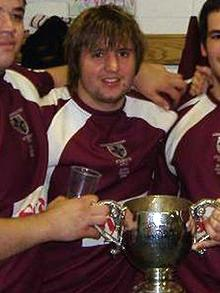 could not bear to watch the most brutal parts of the game on the touch line. This involved David and James being thrown horribly to the ground like a rag doll and players piling on top of them.
I would turn away as they became hidden under the bulk of burly bodies wrestling away on top of them. But they never complained. It was far worse for me. In fact, my boys tell me that footballers suffer worse injuries than rugby players, though I am not convinced. They have such a bravado attitude, living life optimistically to the full. And I wouldn’t want that to change.
My son James was a hooker, just like Daniel James, which means getting into the thick of a scrum. There were times when as a young player, he was carried off the pitch with stud marks on his face. I didn’t protest when he decided to give it up.
My heart goes out to the loving family who were forced to make an agonising choice which no parent ever wants to face themselves. They did what they considered was the most loving act, to end Daniel’s constant suffering and pain at his request in a Dignitas clinic following an horrific sporting injury which left him paralysed. It must have been devastating for his team mates too. It is always those left behind who suffer the most when loved ones take their lives.
I wonder whether today’s advances in medicine could have helped Daniel in some way, like they did Sonya Smith, 45, who was paralysed in a car accident. I wrote about it here.
It describes how she walked again after undergoing controversial embryonic stem cell treatment in India. Sonya flew to New Delhi to be treated by Dr Geeta Shroff, a doctor who runs a private hospital treating more than 300 patients with embryonic stem cells.
After two months of injections, Sony said she regained bladder and bowel control, sensation in her thighs and feet, and leg muscle growth.
“It’s just amazing, the difference. Eighteen months in Australia with physiotherapy and I couldn’t move anything, nothing was happening. I’ve been here nine weeks and my toe’s moving.”
Daniel was only 23. For him, there was no light at the end of the tunnel and he had made suicide bids, begging his mum Julie to “set him free†after being told he would never walk again.
We will never know if this treatment could have helped Daniel too. However, our politicians now have the chance to help make it happen in the UK so that others like Daniel will have some hope.
On Wednesday, the controversial issue involving embryonic stem cell research is being voted on in the House of Commons. Although the Human Fertilisation and Embryology Bill is under threat by Catholic Labour MPs, support for it comes loud and clear from Gordon Brown following his personal tragic experiences.
In an article which he wrote, he hinted at his own experiences as the father of two children with serious diseases – his daughter Jennifer died at just 10 days old, while youngest son Fraser suffers from cystic fibrosis – and argued passionately for the advancement of scientific research.
This is what he wrote:
With adult stem cells already being used in treatments for conditions including leukaemia and heart disease, scientists are close to the breakthroughs that will allow embryonic stem cells to be used to treat a much wider range of conditions, especially those affecting the brain and nervous system.
Stem cell research therefore makes it possible to contemplate new and effective treatments and cures for diseases that have afflicted mankind over centuries – from Parkinson’s and Alzheimer’s to conditions such as cancer that affect every family.
Indeed, medical researchers believe that stem cell therapy has the potential to derive new knowledge to change dramatically the treatment of many other human afflictions, including spinal cord injuries and muscle damage.
Daniel’s parents will never know if treatment using stem cell research could have provided the glimmer of hope he felt he didn’t have and stopped their son from choosing death. But there is a chance that others in a similar situation could benefit.
UPDATE: Guys, don’t be squeamish. This article questions whether men’s testicles could provide an alternative source of stem cells to human embryos.
This is such a difficult area, and would need great care. I’m waiting with interest to see how things go.
[…] With adult stem cells already being used in treatments for conditions including leukaemia and heart disease, scientists are close to the breakthroughs that will allow embryonic stem cells to be used to treat a much wider range of … Read More […]
Hi Ellee.
Thank you for raising the question.
I became quadriplegic in an bathing accident last year , the only thing that keeps me alive is hope,
and that the pain I feel is bearable for now, (when I’m fed a pile of pills) I think I understand Daniel and my heart goes out to his family and friends.
I too hope that this tragedy can be a ongoing reminder for the public of how we feel and how urgent this science is needed.
Thank you.
Thomas.
Thomas, I’m so sorry to learn about your terrible accident. I wish with all my heart that science will be able to conduct the necessary research to provide you and others with the hope you so desperately need. Let’s hope our politicians take note of this.
So religionists are against stem cell research.
They deem a non sentient cluster of a few cells as being ‘life’ and sacrosanct.
And yet they do not object to IVF treatment which involves the creation of many embryos from which only two are chosen – the rest are terminated.
[…] Could stem cell research helped save Daniel? I wonder whether today’s advances in medicine could have helped Daniel in some way, like they did Sonya Smith, 45, who was paralysed in a car accident. I wrote about it here. It describes how she walked again after undergoing … […]
Kevin, you are absolutely right about IVF, I’ve mentioned that in the past too.