What a great way to start the new year, by really 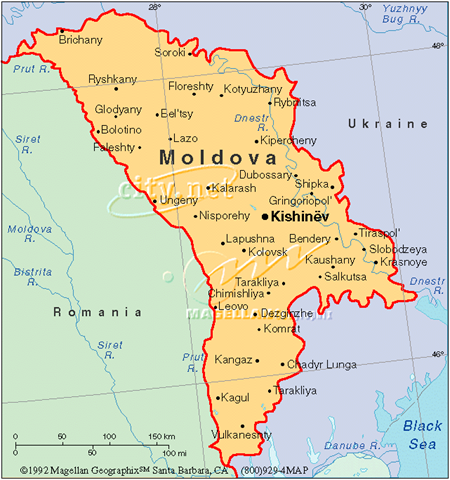
 making a difference to the lives of others, knowing your actions will help them live better lives.
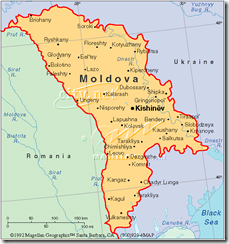
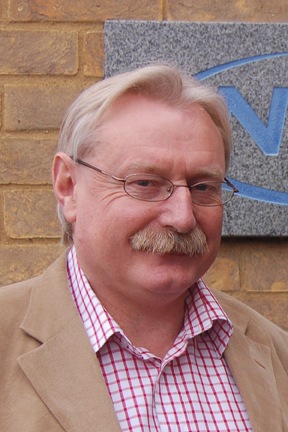
I’m particularly referring to Prof Wayne Powell, (pic) CEO of the National Institute of Agricultural Botany in Cambridge, who will shortly be heading for Moldova – the poorest country in Europe – to set up an agricultural aid site.
I must admit I knew nothing about Moldova, a former Soviet republic, until being asked to write about this very worthwhile project. It’s hard to believe that a country exists with a missing generation of people who have fled to richer countries, leaving behind their children and elderly parents.
Here is the press release about this exciting trip:
A team of scientific experts from the National Institute of Agricultural Botany plan to visit Moldova next month, the poorest country in Europe, and set up an agricultural aid site.
The former Communist-run country suffered its worst heatwave in living memory last summer when wells – their main source of water – dried up for the first time in 70 years.
The four-man NIAB team from Cambridge, headed by Chief Executive Prof Wayne Powell, will be given a 2-hectare plot of land by the mayor in the village of Burlacu which will be transformed into a productive agricultural site to demonstrate how different crops can be grown successfully throughout the year. It will become a community project and a best practice model for nearby villages.
The trip, between 4 – 10 January, is being organised by the charity Central and Eastern European Ministries (CEEM), whose Secretary John Law, a former NIAB scientist, said the Moldovan region was desperately in need of agricultural aid.
Most of its land is presently being used to grow vines, threatening their food security. There is also little knowledge or access to improved cultivars or sources of seed to plant new crops.
Prof Powell, and team members Mike Day, Don Pendegrast and Terry Rugg, plan to set up poly tunnels in the village, which has a population of 1,200, and establish a mini research site to demonstrate how various crops can be grown to provide food over a longer growing season; for example cabbage, which can be produced throughout the year, as well as maize, peppers, tomatoes and sweetcorn.
Prof Powell said he was looking forward to helping Moldovans in this hands-on project which would make a real difference to their lives, helping them to produce healthy crops, as well as providing advice and sponsorship in the poorest European country.
He said:
“I am delighted to be involved in this project and explore how the skills and expertise of NIAB can help improve the lives of Moldovans. Indeed this project has galvanised all our staff who are collecting clothes and other old office computers and equipment which will be taken to road lorry next spring.�
Mr Law said CEEM was thrilled to have the support of NIAB, recognised as a world leading agricultural research company, and that it was a unique partnership with the village mayor and local church.
He said the region also suffered from a lost generation of 30-50 year olds who have moved to other countries to work, leaving their young children and elderly parents behind. This has added to poverty and an increase in starving “street children� who the local church is caring for. These children are expected to help with the project too.
Mr Law said:
“We hope that this demonstration farm will be in the centre of the village so villagers can come and see their local best practice. I am confident word will spread and there will be tremendous interest from neighbouring communities who will want to replicate this. NIAB will supply the poly tunnels and may sponsor, or seek a sponsor, for its irrigation which could also be extended to the whole village.
“This is a very important visit to promote self sufficiency in crop production during future year, regardless of the climatic conditions. We are also hoping NIAB’s high profile support will encourage other organisations and seed companies to follow suit and offer sponsorship too.
“NIAB is uniquely placed to help provide technical expertise with the appropriate technology solutions that can make real differences to the lives of so many in an often overlooked part of Europe. It is an extremely worthwhile humanitarian and agricultural project to support.�
What plans do you have to make a difference this year?
Update: The trip was unfortunately postponed due to treacherous snow conditions in Moldova, making it impossible for the aims of the mission to be accomplished in time. It is hoped to be rescheduled for May.
Sounds a very worthwhile project.
Making a difference? I just hope to open my students’ minds to British culture and enhance their contact with it as best I can.
How wonderful to see positive action on the international stage. But why is it always individuals that show leadership not governments? Ellee will you help us to promote World peace in 2008 as a caring woman journlaist. Why is the Prime Minister, Gordon Brown stuck in a small domestic agenda? We urge him and you to show support for our “Disarmament and Globalisation” conference at SOAS on Monday 7th Jan. Read Freedland in the Guardian yesterday, on Gordon’s role in 2008. http://www.guardian.co.uk/Columnists/Column/0,,2234009,00.html